Design System
The Cloudaware Design System is the largest and longest-running initiative I have led at the company. It touched not one product or one team, but the entire visual and technical foundation on which both marketing and the product itself were built.
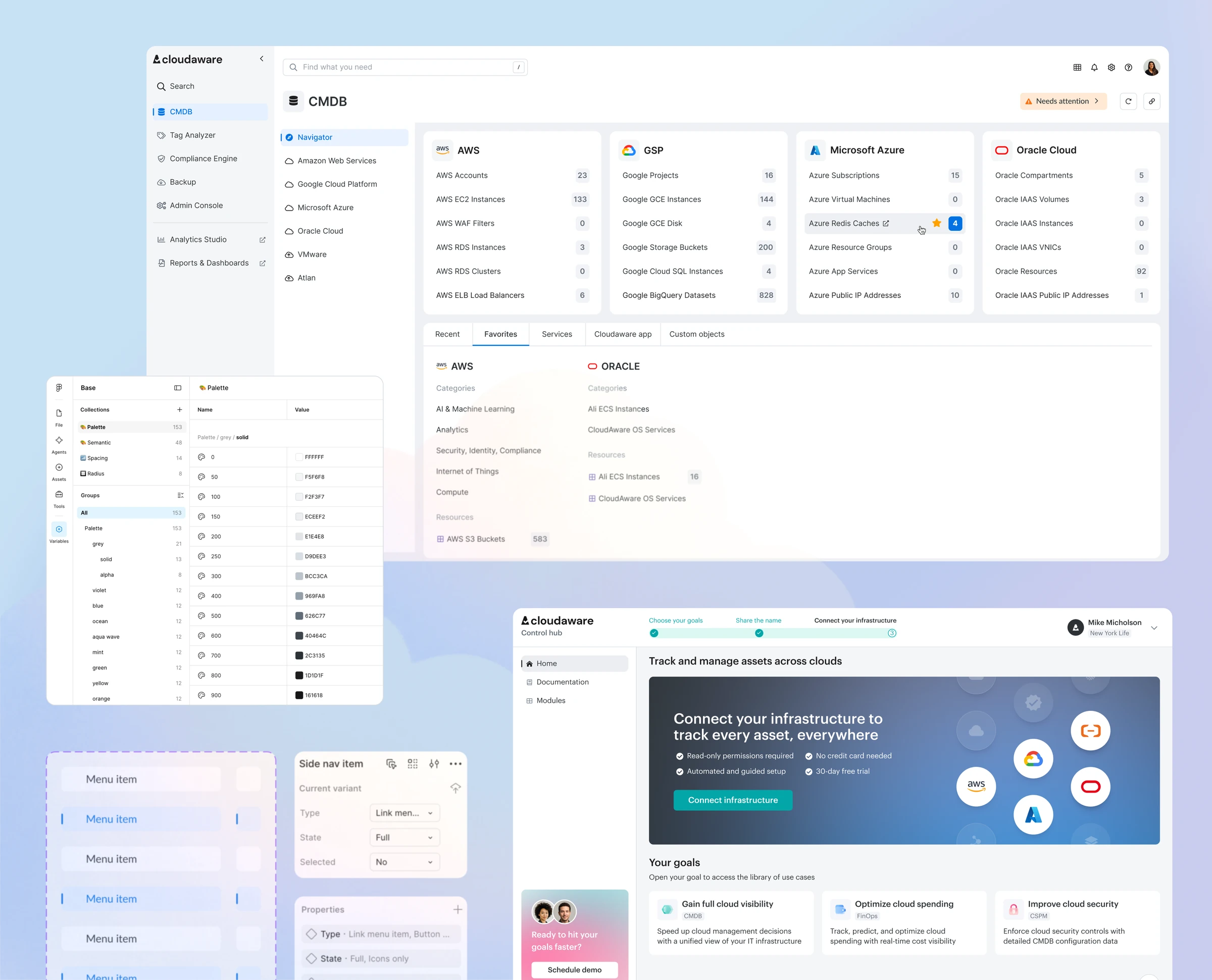
The problem
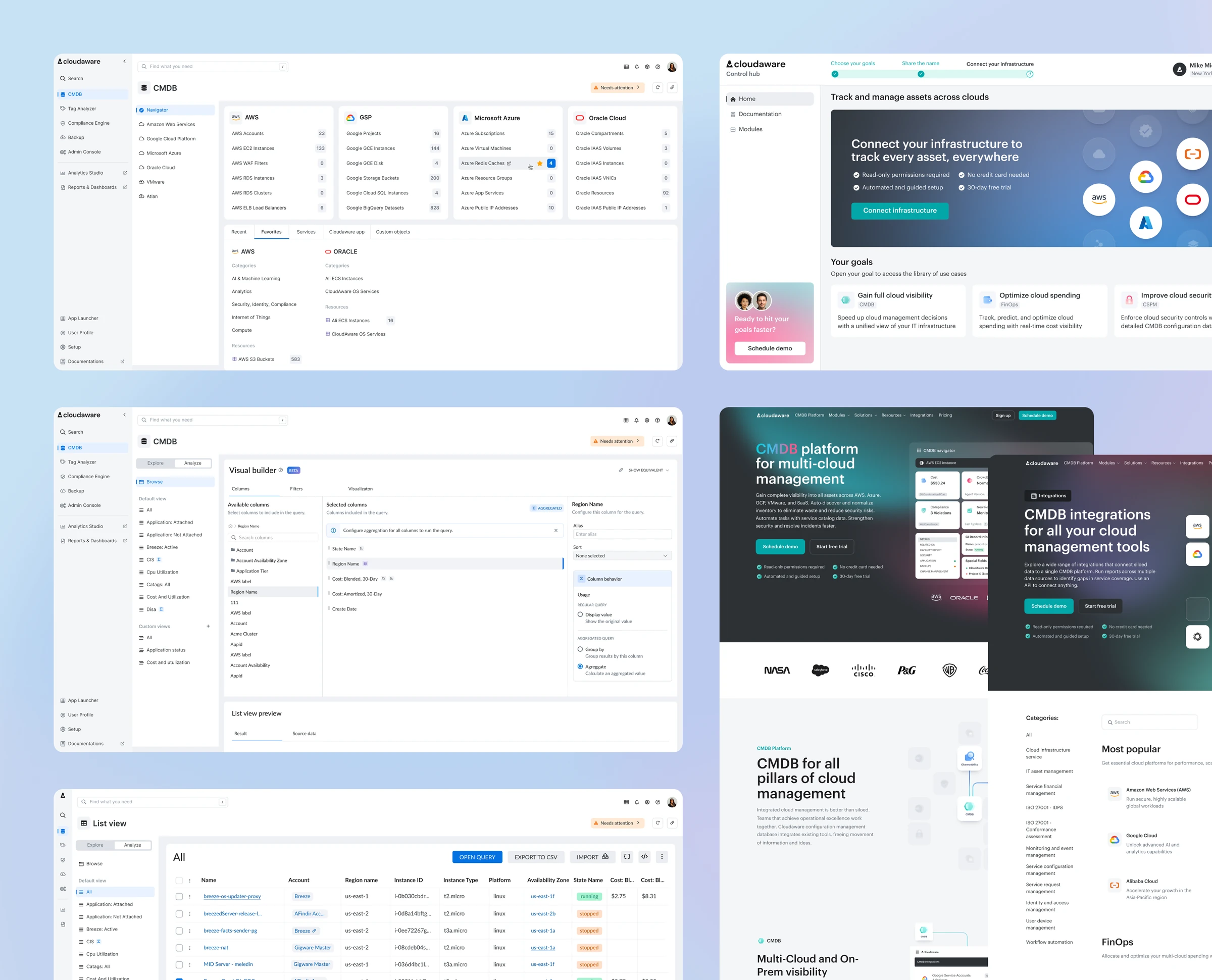
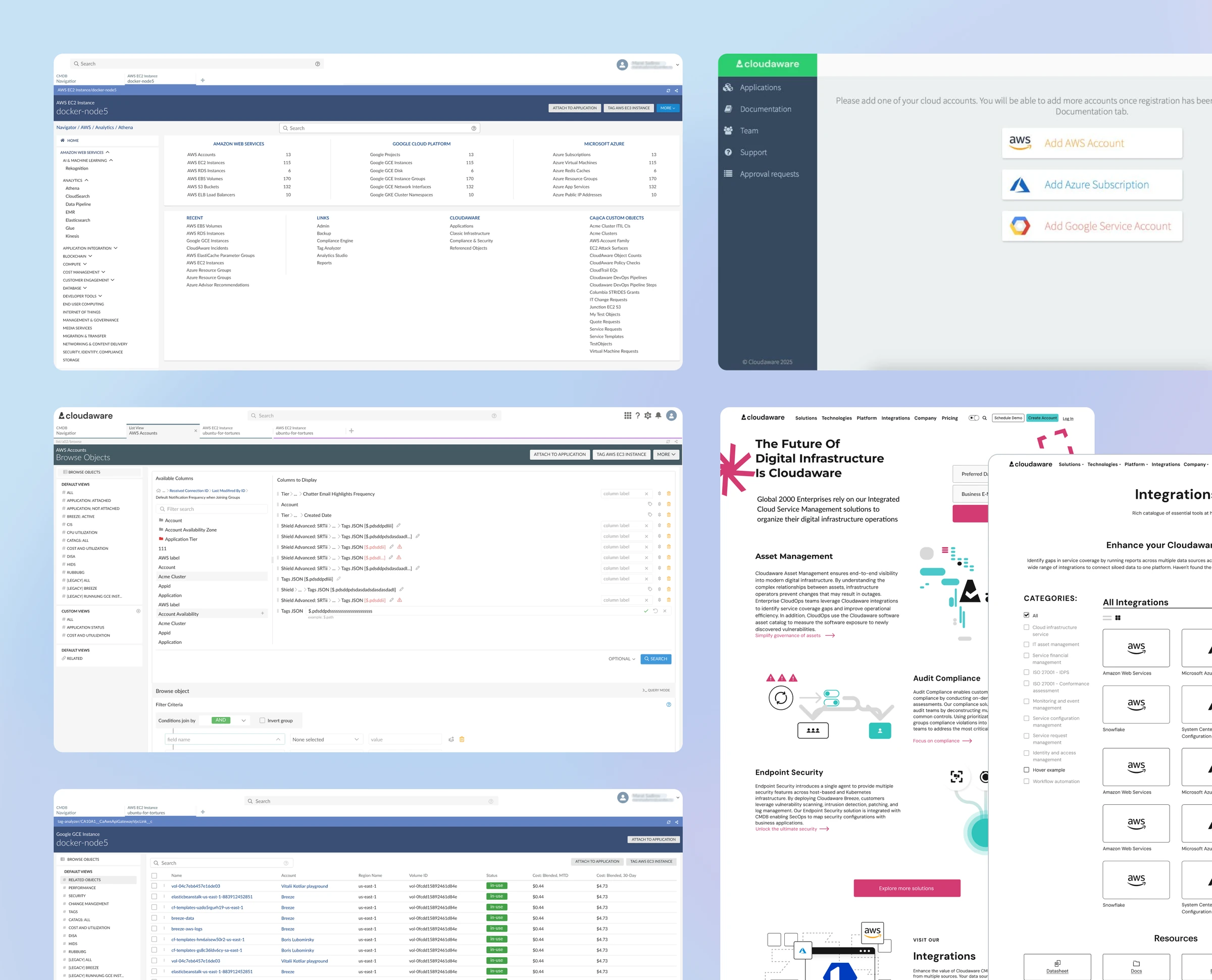
Cloudaware CMDB had been assembled by hand by different developers for years, with no shared visual language.
- There were not enough components, and some screens were built almost from scratch for a specific task
- The link between design and engineering rested on one-off agreements rather than on a real process
- Marketing was in the same state — the website and internal materials existed as separate entities, assembled from different elements that were never reused anywhere
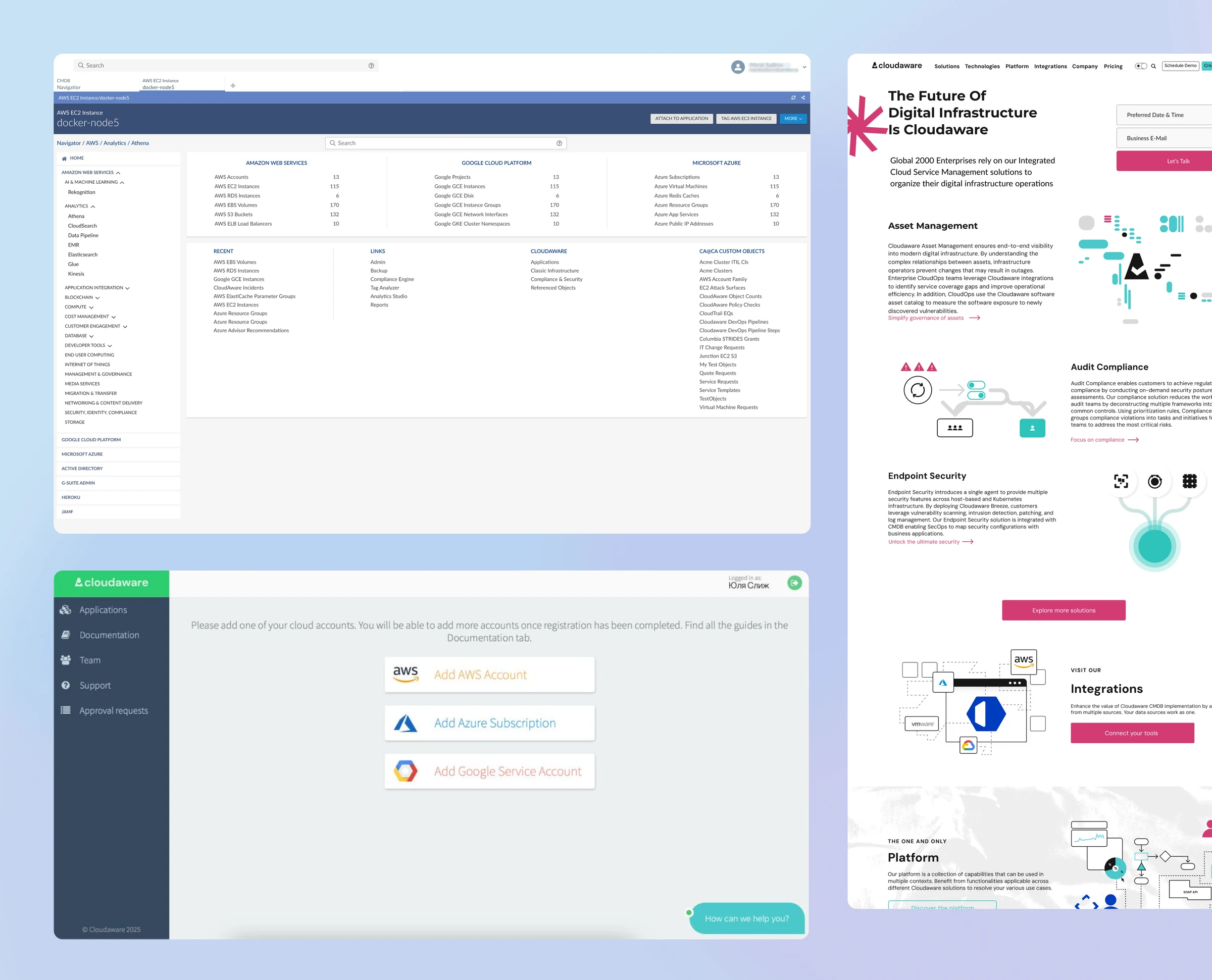 Old products
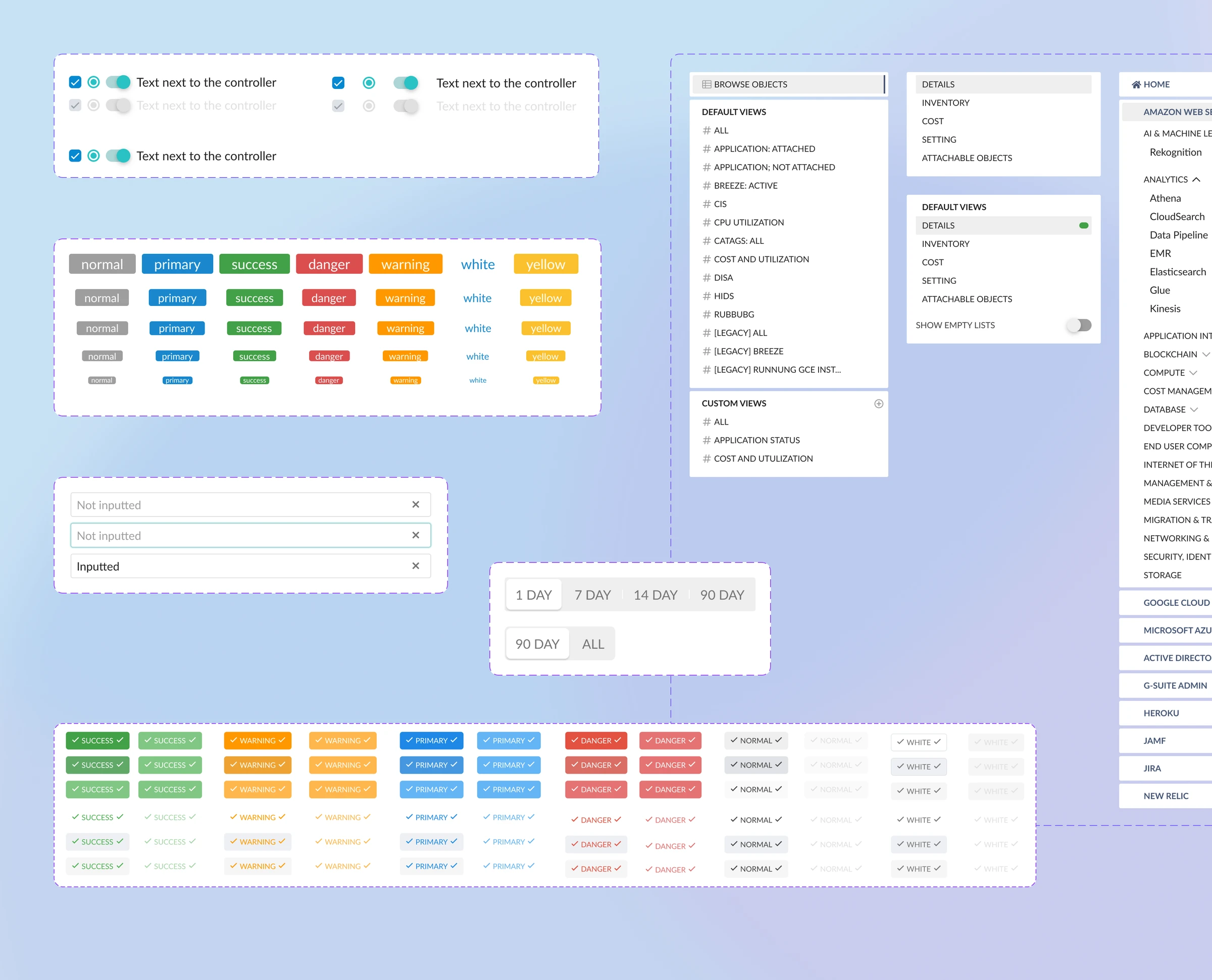 Old components
How I solved it
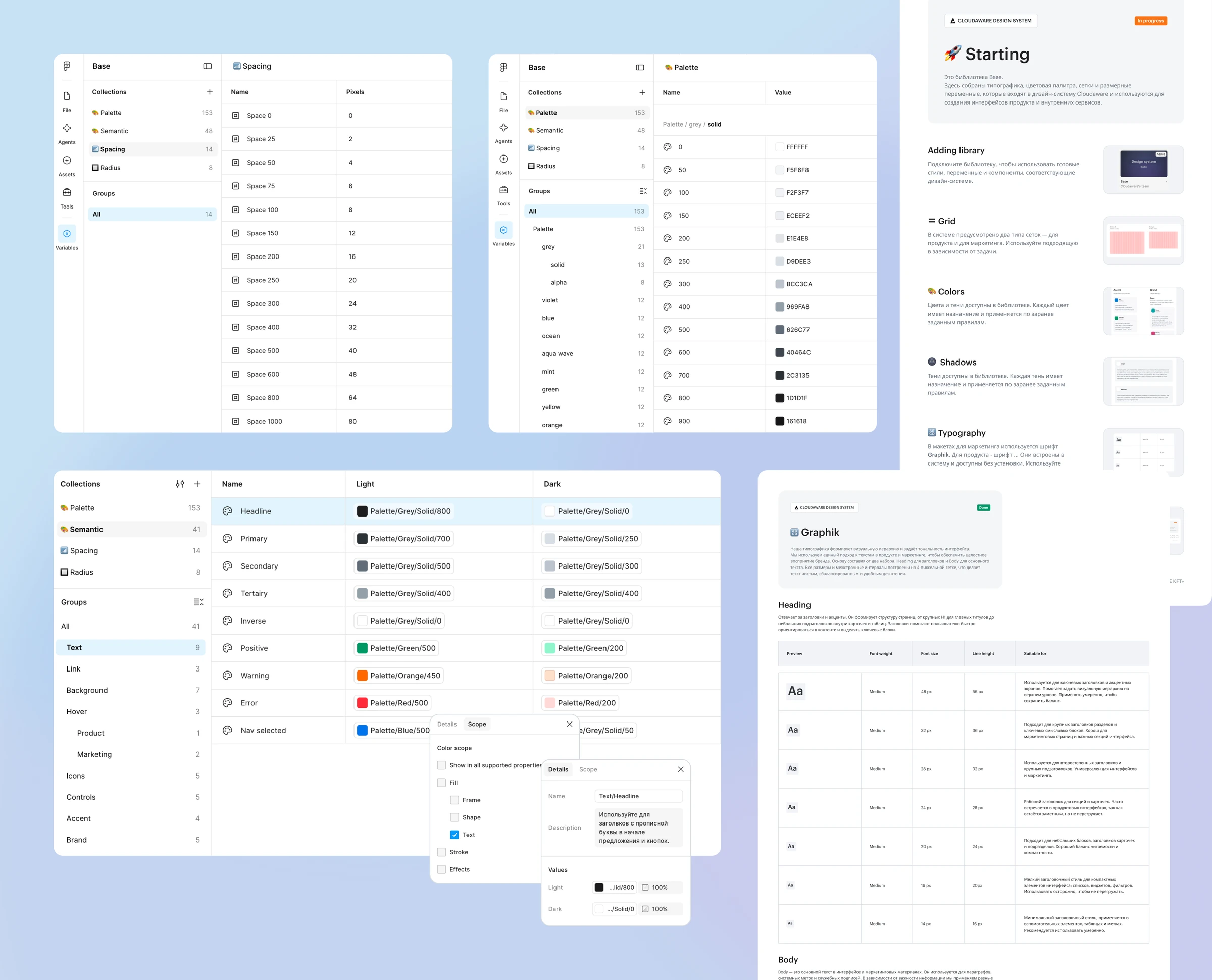
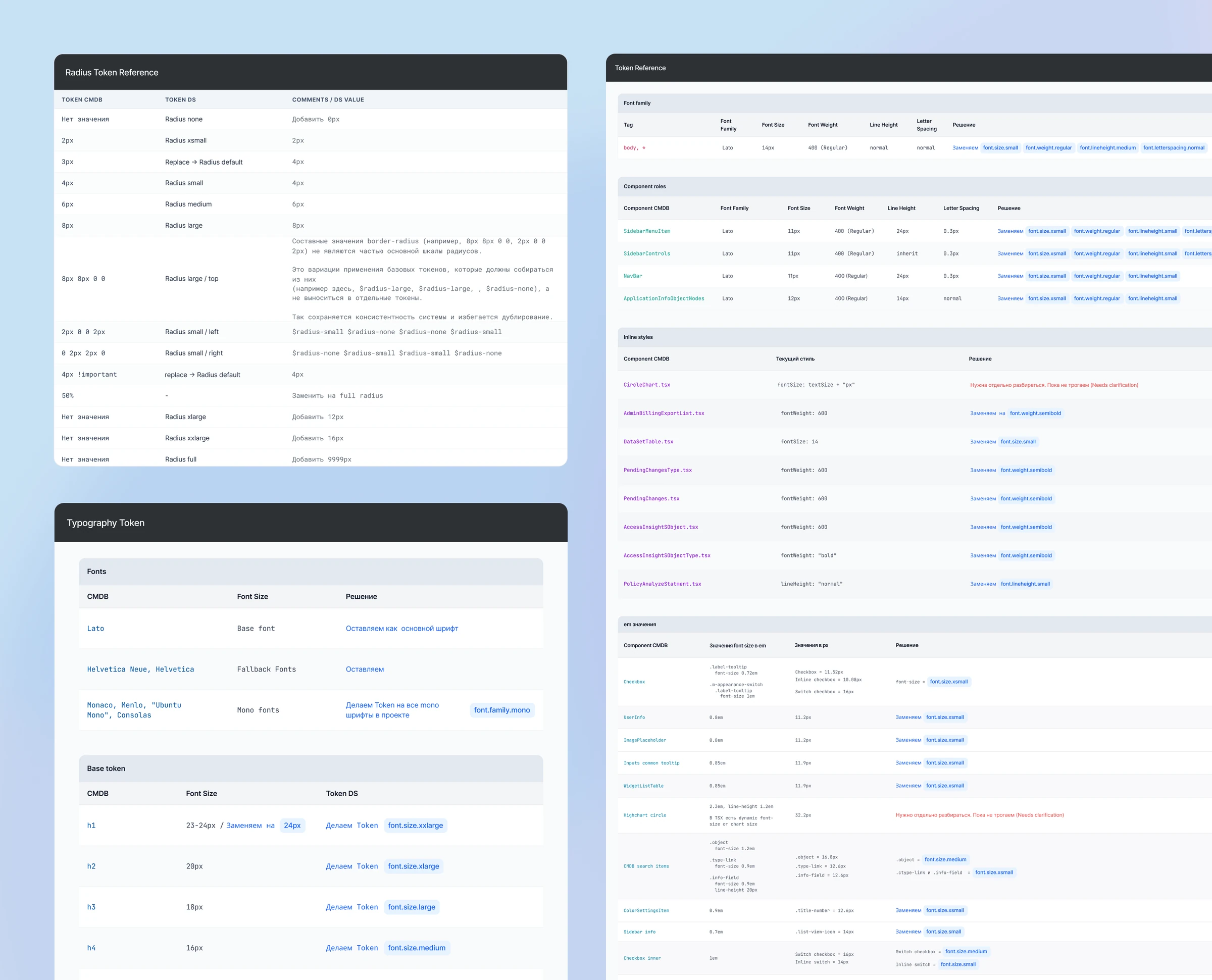
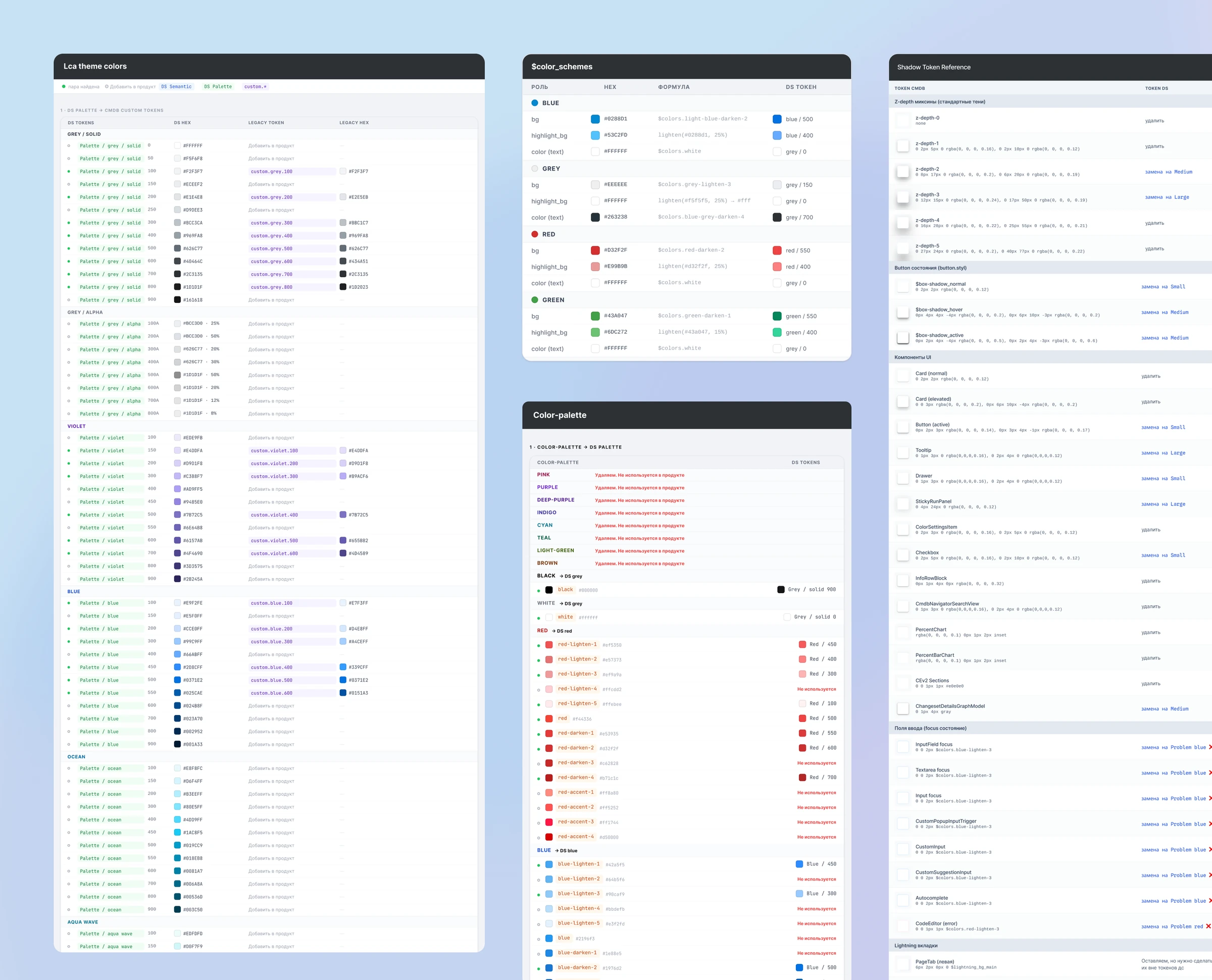
Adoption & AI-accelerated workflow
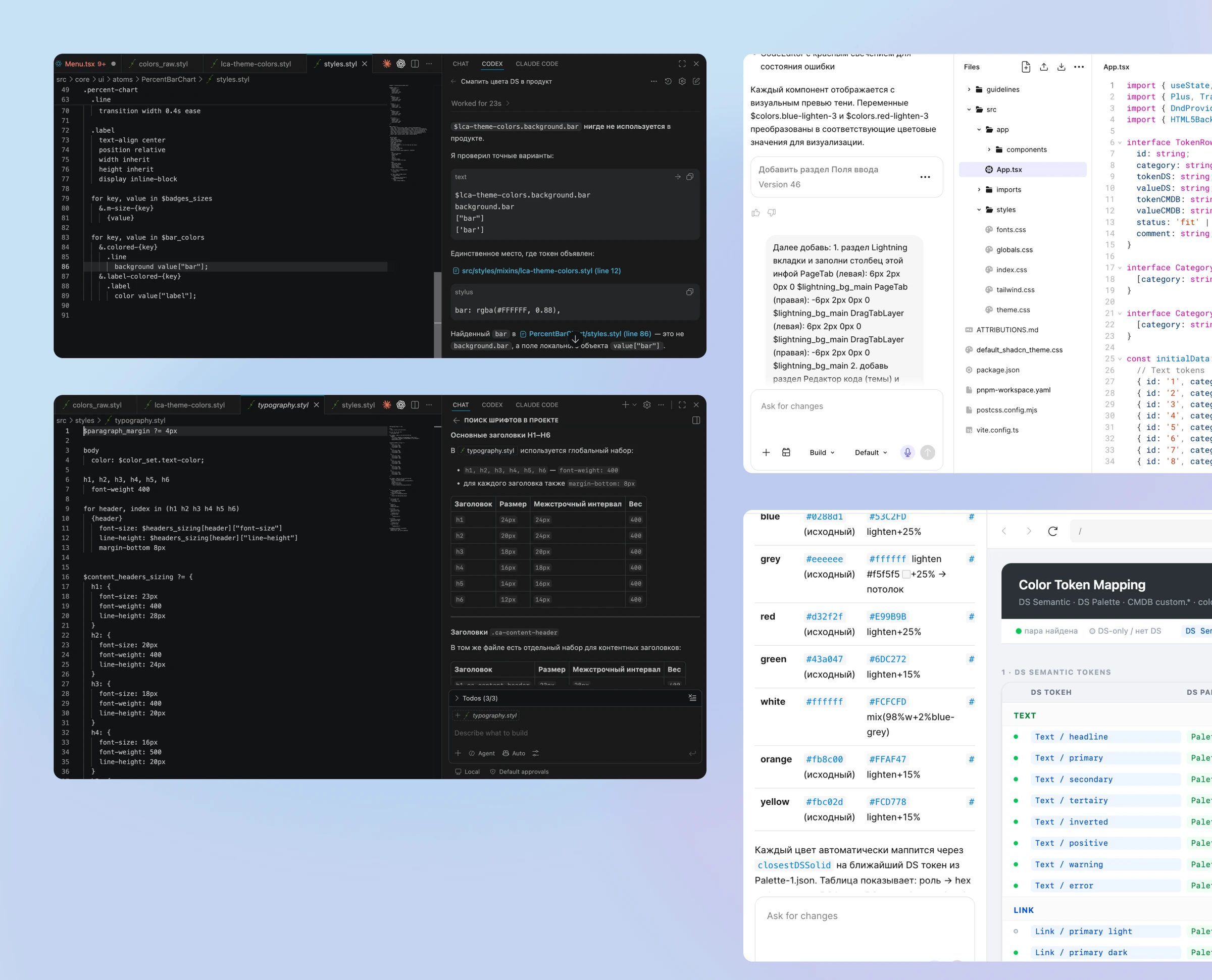
The hardest stage was rolling the DS out into the main product: it had been changed by different people over the years under different technical constraints, so the work had to be done carefully and in stages — fonts first, then colors, spacing and so on. I did most of this work together with AI: I worked closely with VS Code and Claude Code, which sped up the rollout and reduced the risk of errors.
Today the core layer is about 70% implemented: we are cleaning up tokens and gradually scaling and refining components, starting with the key layout components. It is still an active, long process, but the infrastructure and processes are already in place and working.
Separately, within this project I mentored a designer from the marketing team for a year: I taught her the fundamentals of the Design System and the principles of working with it, how to build and correctly structure components and layouts, how to organize and maintain Figma files, and how to integrate AI into design, and helped her grow professionally.
The impact
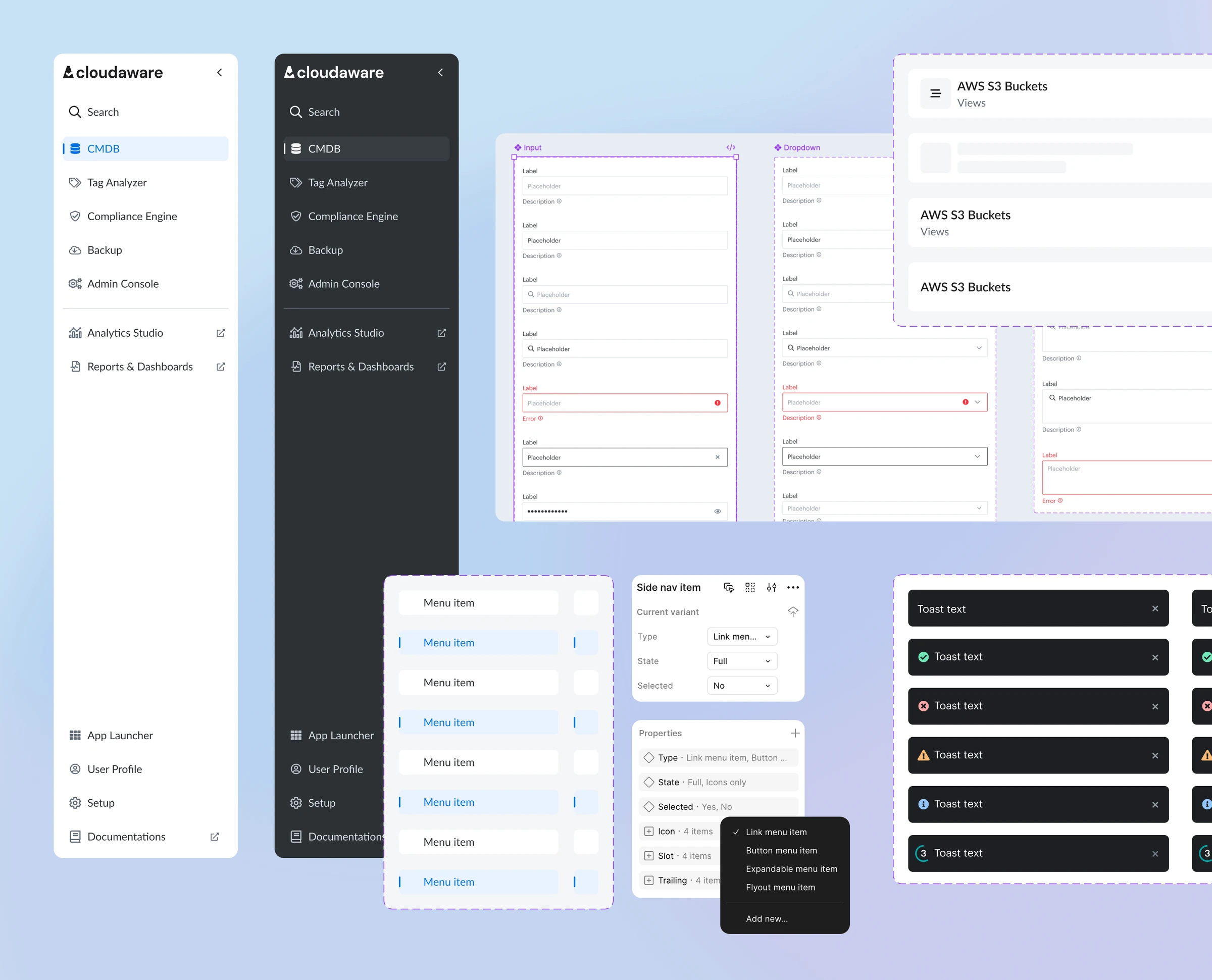
The Design System became a single source of truth for two teams that used to work differently.
Cases
Cloudaware consists of several cases — each a self-contained piece of the product work.